Title: With the Fire on High Author: Elizabeth Acevedo Edition: Paperback Rating: 4/5
Emoni is Seventeen. She juggles school and work with taking care of her two-year-old daughter, and while she doesn’t feel supported by the father of her child or his family, she has her grandmother on her side. Emoni’s passion is cooking, and she dreams of being a chef. When she cooks, people fall in love with her food, and they swear she adds a touch of magic. Her dishes bring back wonderful memories for the people who eat them, and often move them to tears.
When a Culinary Arts course starts running at her school, Emoni signs up, but the discipline of the professional kitchen threatens to stifle her creativity. Will a class trip to Spain being her closer to her dreams, or will her friendship with the new student in the class distrct her from her responsibilities – and her talents?
This is an inspiring story. Emoni has many reasons to give up on her dreams – from the judgement of her classmates during her pregnancy to the demands of raising a child while studying and working to help pay the rent on her grandmother’s apartment, and the reality of learning to be a professional chef. She already knows she can cook, but she fails assignments because she adapts and improves the recipes. The teacher wants her to learn the basic rules, and doesn’t give her credit for her talent. Anyone with a gift for creative subjects will understand Emoni’s frustration with her teacher, and with the restrictions of a structured course. She is being asked to become a beginner in a subject at which she already excels, and while there are good reasons for learning the rules, it feels liek a rejection of her abilities.
I understood. I cried. I laughed with Emoni and her friends, and I smiled when her family showed their support. Emoni is a wonderful character – determined to own her responsibilites, determined not to be ashamed of her daughter, and utterly determined to follow her dreams. It’s a rollercoaster story, and there isn’t a neat, happy ending, but Emoni’s confidence and determination carry her through her challenges.
There’s a lot of love in this book: Emoni’s emotionally charged recipes; her tough, supportive grandmother; her best friend who knows exactly what to say; her love for her daughter; and her relationship with her own absent father. There’s love for culture and heritage, for food and traditions, and for community and family and friends. It’s a feel-good read with depth and spice – just like Emoni’s cooking.
Have you read With the Fire on High? What did you think of the story? Click through to the full blog to access the comments section, and share your thoughts! No spoilers, though – you can post those on GoodReads!
Title: The Base of Reflections (Re-issued in 2021 as The Hidden Base) Author: A E Warren Edition: Paperback Rating: 4/5
The Base of Reflections isn’t published as YA, but it is entirely YA-compatible, so I am very happy to review it here!
What if humans created a superior species using genetic engineering? What if Homo Sapiens were then held responsible for the damage to the planet, and forced to make reparations? And what if we used genetic engineering to bring back extinct species – including Neanderthals?
The Base of Reflections picks up the story from Book One’s cliffhanger ending, taking the characters into new territory as they discover more about the world they have grown up in. Where The Museum of Second Chances explored one of the four settlement bases, this book gives the reader a wider view of the world, physically and politically. There’s a new Point of View narration, following a group of Neanderthals and humans from a different base, and the narrative is split between various characters in different locations. Each thread of the plot shows the reader new aspects of the wider society, raising the tension and the risk for all the characters.
The question of right and wrong, and how to tell the difference, is a theme that runs through both books. Close to the end of Book Two, there is a wonderful conversation about power, leadership, and corruption, as two characters try to decide on the right course of action. There is a tension between following the rules, and doing the right thing, and it is interesting to see how each character reconciles the choices they make with their personal loyalties, and the expectations they have grown up with.
The wider cast of characters in this book means that the story is not focused entirely on Elise and her experiences. The characters from Book One continue to develop and grow, alongside the new Neanderthals, Sapiens, and genetically enhanced humans. I was fascinated by the Neanderthal characters – by the effect on them of their experiences as museum exhibits, by their relationships with each other and with their Sapien and enhanced friends, and by the development of their beliefs and motivations throughout the book. This is a really intersting series, and I’m looking forward to reading Book Three!
Have you read The Base of Reflections? What did you think of the story? And what about the world AE Warren has created? Click through to the full blog to access the comments section, and share your thoughts! No spoilers, though – you can post those on GoodReads!
The Base of Reflections has been re-issued as The Hidden Base!
Title: The Museum of Second Chances (Re-issued in 2021 as Subject Twenty-One) Author: A E Warren Edition: Paperback Rating: 4/5
The Museum of Second Chances isn’t published as YA, but it is entirely YA-compatible, so I am very happy to review it here!
What if humans created a superior species using genetic engineering? What if Homo Sapiens were then held responsible for the damage to the planet, and forced to make reparations? And what if we used genetic engineering to bring back extinct species – including Neanderthals?
Book One of the Tomorrow’s Ancestors series introduces a world where unaltered humans are treated as manual workers, and denied luxuries as punishment for their destruction of the natural world. Teenager Elise is determined to move out of her manufacturing job, and her life changes when she is hired to work as a companion to one of the Neanderthals in the museum in the base where she lives. Her task is to spend time with him and make sure his life as a glorified zoo animal is interesting, while ensuring that he only has access to technology and food from 30,000 years in the past. Elise learns quickly that her job is not as straightforward as she hoped, and that there is more going on in her base – and in the museum – than she realised.
Elise is a sympathetic and engaging character, and right from the start I cared about her story. She is surrounded, at home and at the museum, by a cast of well-drawn and interesting colleagues, neighbours, and family members. I particularly liked her relationship with the museum nurse as it developed through the book, and her relationship with her brother. My favourite character has to be Kit, the Neanderthal she works with. His grudging acceptance of her companionship grows into something more as she finds ways to bend the rules, and make both their lives more interesting.
The ending is a cliffhanger, so I’m glad I bought Book Two!
Have you read The Museum of Second Chances? What did you think of the story? And what about the world AE Warren has created? Click through to the full blog to access the comments section, and share your thoughts! No spoilers, though – you can post those on GoodReads!
Young Adult urban horror/fantasy set in and around Cambridge? Yes please!
The blurb on the back of Book One of the Sentinel Trilogy promises ‘unconventional heroes, monsters, murder and magic’, and the story doesn’t disappoint. Fifteen-year-old Nicholas Hallow’s world is turned upside-down when his parents are killed in a train crash. A letter from his father to an old friend sets out what should be done if anything were to happen to his parents, and Nicholas finds himself uprooted from his home and placed in the care of a godmother he knows nothing about. Chased by evil entities he doesn’t understand, and with his future decided by adults who refuse to explain the danger he faces, Nicholas attempts to find his own answers. Will he find the truth, or will the demons find him first?
Sentinel is a fun read. There are dramatic scenes that explode vividly from the page like sequences from a film, and quieter, more reflective sections that give the reader a chance to get to know Nicholas, and the people around him. The constant refusal of the adults to explain anything to Nicholas becomes more frustrating for him as the story progresses, and while this frustration is shared by the reader, it serves a chilling purpose at the end of the book. Nicholas is relatable as a grieving, powerless teenager, attempting to understand the secrets that define his life, but it is the supporting characters who bring colour and depth to the story. Sam, the elderly friend of the family, and Liberty, in particular, provide the book’s unconventional heroes, and the principle antagonist is absolutely delicious in her evil scheming.
The settings for the story are well drawn, and the scenes set in Cambridge are fun to read if you are familiar with the locations. The sequence at the Fitzwilliam Museum felt very close to home, and the descriptions of Midsummer Common provided a solid real-world anchor for Nicholas’s experiences. There are hat-tips to Narnia (I counted three), an interesting system of magic, symbols, and folklore, and a house that felt like a character in its own right.
Judging by the ending, things can only get more exciting in Book Two!
Have you read Sentinel? What did you think of the story? Click through to the full blog to access the comments section, and share your thoughts! No spoilers, though – you can post those on GoodReads!
Happy Christmas from Taller Books! If you’re celebrating today, here’s hoping that all those parcels under the tree are filled with wonderful books: gorgeous hardbacks, eReaders, and maybe the end of that series you’ve been waiting for …
Rachel is taking over the blog today, to talk about the politics behind the Battle Ground series. Click through to the comments and let us know what you think!
Step by Step
Anyone who follows me here or on social media will be aware that I have spent the last two years writing novels. Don’t worry – this isn’t advertorial. There are links to the Battle Ground series at the end if you’re interested, but this isn’t about selling books.
This is about a story that I hoped would become a
self-avoiding prophecy. A five-book adventure that I hoped would be irrelevant
long before today.
A story that feels more real, and more possible, with every
news story and Twitter rant and argument round the dinner table.
So what’s the point of this blog post?
I want to explain what the books are really about. Not the
blurb on the back. Not the Action and Adventure that Amazon is promoting. Not
even the teenage characters who have become my ambassadors to other people’s
book shelves.
I want to write about the political landscape in my
near-future, UK-based story, and I want to sound an alarm.
A Post-Brexit Dystopia
Brexit is the excuse for what happens in
the books. I tell you that up front, on the cover. The Battle Ground series is set in a dystopian near-future UK, after
Brexit and Scottish independence.
But Brexit is not the point. It’s not the
end of the story – it happens years before the start of Book One. The point is
what happens next, and what happened earlier to lay the foundations for my
dystopia.
And it is a dystopia. My near-future UK is
under Martial Law. The army is in charge. Racism is normal. Islamophobia is
normal. Parliament has been suspended.
Sound familiar?
Lies
and Cheats
When I started writing in November 2017, I
was inspired by the Brexit Referendum. Campaigns on both sides dominated by
lies, guesswork, illegal spending, and a lazy assumption that it was all a
game. That there was no way the Leave Campaign would win. I could see the divisions
in the country, and the sudden permission to make racist statements without
apology or consequence. I could see the complexity of the process ahead of us –
campaigning to remain, or untangling ourselves from the EU. I could see the
gaping hole where calm, measured policies should be, on issues as diverse as
the Irish border, visa-free travel, and the rights of EU citizens in the UK –
and UK citizens in the EU.
I could see us lining up to throw years of
peace, co-operation, and friendship onto a bonfire of empty promises: sovereignty,
independence, blue passports. Control of our own borders.
I could hear the dog-whistle call to anyone
who felt pushed out or inconvenienced by immigration. To anyone who needed a
scapegoat for the lack of jobs, or perceived red tape, or the decline of the
high street. Who believed the promise of more money for the NHS.
And it frightened me.
I saw the papers, tribal as always in the
UK, digging in and promoting one side of the debate. Of course leaving the EU
would be good for us. Who wants to be associated with those unelected bureaucrats
and their rules about bendy bananas?
No mention of the MEPs we elect. No assessment
of the longest period of peace between EU members for more than a millennium.
No debunking of the bendy banana myth, or the lie on the side of the bus.
Rights
and Freedoms
And then I thought about the Patriot Act in
the USA. Legislation brought in after the 9/11 attacks to make it easier for
the government to intercept and prevent terrorist activity.
Legislation that traded long-held freedoms
for a promise of safety. That enabled the government to more easily monitor the
phones and emails of private citizens. That allowed the indefinite detention of
immigrants. That handed power to unaccountable government agencies.
How easy would it be to slide into
totalitarianism, step by tiny step?
Slow
Progress
That’s the backdrop. That’s the theme and
the message of the Battle Ground series.
Step by step, without noticing, how easy
would it be to walk into dystopia with the best of intentions?
And to underline this theme, there’s the
parallel journey of my protagonist and antagonist. Two strong young women,
navigating a world without mobile phones or civilian internet. A world where
news is controlled by the military government, and terrorists are executed live
on TV. A world where civil unrest and terrorism pushes the army to conscript
sixteen-year-olds to patrol the streets, to make people feel safe again. A
world where racist attacks force British citizens to leave, and seek asylum
elsewhere.
For both characters, their stories develop
step by step – one acting for the government, and one supporting the resistance.
In the later books, they find themselves committing acts they would never have considered
at the start of the series. They both develop their bravery and strength, step
by tiny step. And they both lose themselves, step by tiny step.
Loss
They lose their identities – to conscription,
to rebellion, to abuse and to corruption. They lose friends and classmates to
the quiet war between the government and the people fighting back. They lose
control over their lives and their decisions. By the end of the series, they’ve
both done things they can’t justify in the name of the causes they’ve been
fighting for.
They don’t transform all at once in some
blinding moment of revelation. They get there step by tiny step, one action at
a time. One goal at a time. One choice at a time.
It’s easy to walk off a cliff if you get
used to heading in that direction. If every step you take can be justified and
supported. One step, then the next – and before long you’re falling.
Warning
It will be easy to walk into dystopia. Ask
any EU citizen living in the UK, and you’ll find that we’re half way there
already. We’ve rejected our close relationship with our national neighbours, because
we think it will make us stronger. We’re rejecting our neighbours – the people
who keep our NHS and social care services running – because we don’t like to be
reminded that we’re not the imperial power we used to be. We don’t like to hear
other languages spoken on our streets. We don’t like Germany telling us what to
do.
(Is that right? Is that what we’re leaving
for? Argue with me. Tell me it’s not like this.)
So, step by tiny step, we’re walking
towards irrelevance. We’re walking towards a health service run for the profit
of American insurance companies. We’re walking towards increased immigration
from around the world, and the extreme racism that will provoke. Towards a
shrinking economy. Towards having to meet EU standards for exported goods
without having a place at the table to influence how those standards are
agreed.
Towards isolation.
Resist
So that’s what my books are about. Blindly walking
away from peace, security, and established trade partnerships towards – what? I
hope we’re not heading for the world of the Battle Ground series. I hope we’re
not heading for totalitarianism and isolationism and acceptable racism and civil
war.
But step by step, that’s where we could end
up.
I want my books to be a self-avoiding
prophecy. I want my readers to see what I’m pointing out, and help to change the
direction we’re walking in.
Since I finished writing the series, France
has announced the reinstatement of National Service for teenagers. Sudan cut
off internet and mobile phone access for civilians, to control anti-government
protestors. Iran and Saudi Arabia already stage public executions. Nothing in
the books feels far-fetched any more.
This is what I’m asking my readers to
resist. Electing a pro-Brexit Conservative government with a landslide majority
might be a single step in the process. Leaving the EU might be the next. Small
steps, but every one takes us closer to isolation. To selling off our NHS. To
the break-up of the United Kingdom. To economic hardship. To an end to the
peace and prosperity of the European Project.
We can turn back from the cliff at any
time. It gets harder and harder as we approach the edge, but we can change where
we’re heading.
It’s up to us, and our votes and decisions.
Step by tiny step.
The Battle Ground Series
Books One to Four of the Battle Ground series are available from Amazon. You’ll find them on my Amazon Author Page. The final book in the series will be published on January 9th, and there’s a free prequel novella at freebook.tallerbooks.com.
Please
consider the Battle Ground series as gifts for readers aged 13-103, or for
discussion at your Book Club. Contact admin@tallerbooks.com
for more information, or to arrange an author visit for your Book Club or school.
Title: The New World / The Wide, Wide Sea / Snowscape (Chaos Walking series) Author: Patrick Ness Edition: Kindle Rating: 4/5 – 5/5
Three short stories, designed to be read alongside the Chaos Walking books. They all contain spoilers, so it is really hard to review them properly, but each one adds an extra dimension to the Chaos Walking trilogy.
The New World gives us Viola’s take on the opening chapters of The Knife of Never Letting Go. It should be read after the novel to avoid spoilers, but if you’ve finished the novel, you’ll know what happens. Experiencing the events through Viola’s eyes is vivid and heartbreaking, but it gives the reader a valuable and emotional insight into her backstory. 5/5.
The Wide, Wide Sea is a story of forbidden love, set alongside the events of The Ask and the Answer. It’s another heartbreaking story, this time touching on injustice, prejudice, and the cost of fighting for what you believe in. 4/5.
Snowscape is set after the end of Monsters of Men, and the spoilers are everywhere! Definitely save this story until you’ve finished the trilogy. It clears up some unfinished business from the end of the final book, but also explores a sinister side of the New World that isn’t addressed in the novels. 5/5.
All three stories offer neat, well-crafted insights into the world and the characters of the Chaos Walking books, and all three are worth reading – just don’t jump in until you’ve read the associated novels, as the spoilers are brutal.
Have you read the Chaos Walking short stories? What did you think of the glimpses into the New World? Click through to the full blog to access the comments section, and share your thoughts! No spoilers, though – you can post those on GoodReads!
Title: The Queen of Nothing Author: Holly Black Edition: Hardback Rating: 5/5
I really don’t know what to say about this book! I’d been waiting for the resolution to the particularly painful cliffhanger since I read The Wicked King in January, and I was thrilled when the publishers decided to launch The Queen of Nothing ahead of schedule.
To recap, the series follows Jude – a mortal girl, brought up in Faerie. She fears for her life, her future, and her family, surrounded and threatened by the magic-wielding Folk of the Air. Madoc, the head of her household, teaches her that power is the only thing that will save her.
Jude’s obsession with power leads to a fascination with the Prince who leads the bullies – and to his fascination with her, a mortal who dares to fight back. The Cruel Prince sees this fascination take them both into danger, and in The Wicked King both the danger and the fascination expand.
I don’t want to spoil the series for anyone who has yet to read it, so there’s a lot I can’t say. I can say that The Queen of Nothing is a less dark book than both its prequels, and that the story wasn’t entirely what I was expecting. But the more I think about it, the more I realise how clever the story is, and how neatly the ending ties back to the beginning of the series. Both Jude and Cardan feel much more grown up in the final book, and both characters are starting to learn the lessons of their earlier experiences, mistakes, and failures.
And Jude remains an absolutely wonderful character. She is brought into Faerie at the beginning of The Cruel Prince, and has to fight for dignity, respect, and survival from the start. She is brave, strong, and determined, and willing to do whatever it takes to protect herself and her family. I loved reading her story, and I think these books are going to be my go-to reading when I need to feel brave and undefeated.
Extremely highly recommended.
Have you read the Folk of the Air trilogy? What did you think of the final instalment? Click through to the full blog to access the comments section, and share your thoughts! No spoilers, though – you can post those on GoodReads!
Title: The Toll Author: Neal Shusterman Edition: Paperback Rating: 3.5/5
I’ve been waiting for the third and final book in the Arc of a Scythe series for twelve months, so when I heard there were copies in Waterstones I threw on my coat and went out in the rain to buy one! Thunderhead, book two in the series, ended on a serious cliffhanger, so I wasn’t going to wait to find out what happened next.
The Toll is a larger book than its predecessors, and there are plenty of plot twists packed into its pages. The book continues the story of the Scythes, the only people licensed to kill in a society where no one dies. The Scythedom was set up to manage the population in a post-mortal world, but with the balance of power shifting and new-order Scythes taking a little too much pleasure in ending lives, The Toll explores the ethics of death, dying, and post-mortality.
Following on from book two, the god-like point-of-view character plays a major role in The Toll, interacting with one character in particular, and struggling to overcome its own programming. At the same time, the Scythedom is trying to come to terms with the new-order Scythes and their actions, and looking for other ways to achieve the same ends. The cliffhanger from the previous book is resolved, but the characters are almost immediately thrown back into danger. It feels as if everyone is trying to change the world – but no two groups are aiming for the same outcome.
The scene is set for games of cat-and-mouse, and power struggles on a truly global scale. There’s excitement and scandal, world-changing discoveries and crushing tragedies, and an ending that I didn’t see coming.
I’m still not sure what I think of this series. I didn’t like the characters at the start of Scythe. I didn’t like the setting or the scenario. But I have enjoyed the plot, and the way the author uses his post-mortal society to examine the corrupting influence of power, the ethical dilemmas of a god-like character, and the injustice of death and dying. It’s an interesting read, but be warned: the book two cliffhanger really is painful!
Have you read the Arc of a Scythe trilogy? How long did you have to wait to find out what happened after the end of Thunderhead? And what did you think of the ending? Click through to the full blog to access the comments section, and share your thoughts! No spoilers, though – you can post those on GoodReads!
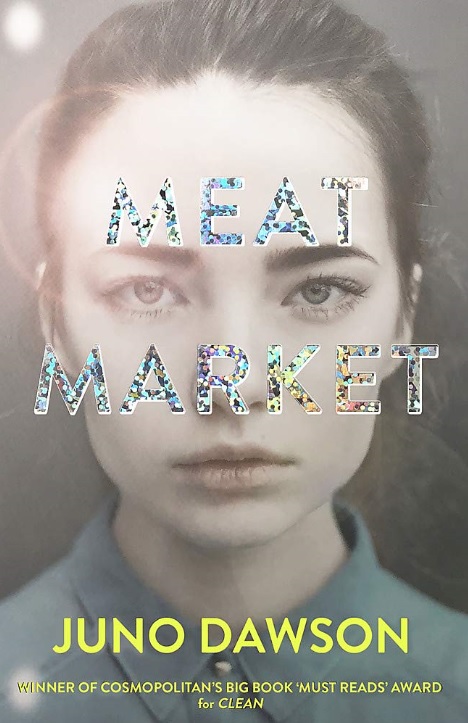
When sixteen-year-old Jana Novak is scouted by a modelling agency, she thinks she’s going into her new career with her eyes open. She doesn’t think of herself as beautiful, and she accepts that her recruitment is based on her height (5’11”) and her on-trend androgynous looks. Her parents, friends, and committed boyfriend support her, while helping to keep her grounded, and her agency finds her work with top fashion brands. She seems well-placed to succeed.
But the pressure and loneliness of long-distance travel, and the demands of the people she works with, start to take a toll on Jana. As she discovers the truth about the industry that pays huge sums of money to use her face and body in their advertising campaigns, she is forced to choose between her career and her conscience.
This is compelling story. Jana is a believable girl-next-door character from a South London housing estate. She hasn’t dreamt of being a model, but she embraces the opportunities her agency provides, and learns as she goes what life as a living mannequin is really like. There are some touching moments, as she connects with the models she meets as she travels the world, and there are some shocking twists as she discovers the realities of surviving a punishing schedule and meeting the expectations of the people and companies who pay her wages.
The book doesn’t shy away from depicting the darker sides of the fashion industry, touching on dieting, eating disorders, drug use, and inappropriate sexual behaviour. But in spite of this, it is an optimistic story, narrated by a likeable, brave teenage girl. Her family and friends feel real and rounded, and her relationship with her boyfriend is lovely. At times, they feel like a much more mature couple, and he helps to keep her connected to her home and her life outside modelling.
Despite the twists and turns of the plot, Jana remains a sympathetic and relatable character, keeping the reader engaged with her story. The clever structure of the narrative – sections of interview alternated with sections of story – is explained at the end of the book, and finding out who was asking the questions made me want to back and read the book again, with this in mind. This is an important and accessible #MeToo novel, and definitely worth a read.
Have you read Meat Market? Did it make you think differently about the fashion industry? Did you think it was an optimistic story, or a depressing one? Click through to the full blog to access the comments section, and share your thoughts! No spoilers, though – you can post those on GoodReads!